
REDITUS STARTUP LIFECYCLE
What is the Reditus
Startup Lifecycle Model?
A six-stage model that defines what real progress looks like in early-stage B2B revenue.
Revenue breaks when sales and marketing activities are conducted before the system is ready to support them.
The Startup Lifecycle defines six distinct stages, each with a clear purpose and a measurable gate.
Progress is determined by observable market behavior, not internal confidence or activity.
Why Did We Build The Startup Lifecycle Model?
After working with hundreds of startups across dozens of markets, we’ve seen a consistent pattern: most startups overestimate where they are in their journey to a repeatable revenue engine. See our blog: What We Get Wrong About Startup Stages
The Startup Lifecycle provides what the industry has long lacked: a clear, evidence-based model and shared language for assessing market readiness, defining what work belongs at each stage, and what evidence is required before moving forward:
- Reduce runway burn on sales and marketing activities they aren’t ready for.
- Founders, investors, teams and capital are now aligned to do the right things at the right time.
- The Startup Lifecycle doesn’t just align teams; it stabilizes leadership.
See our Evidence-Based Revenue System
Overview of the Six Stages
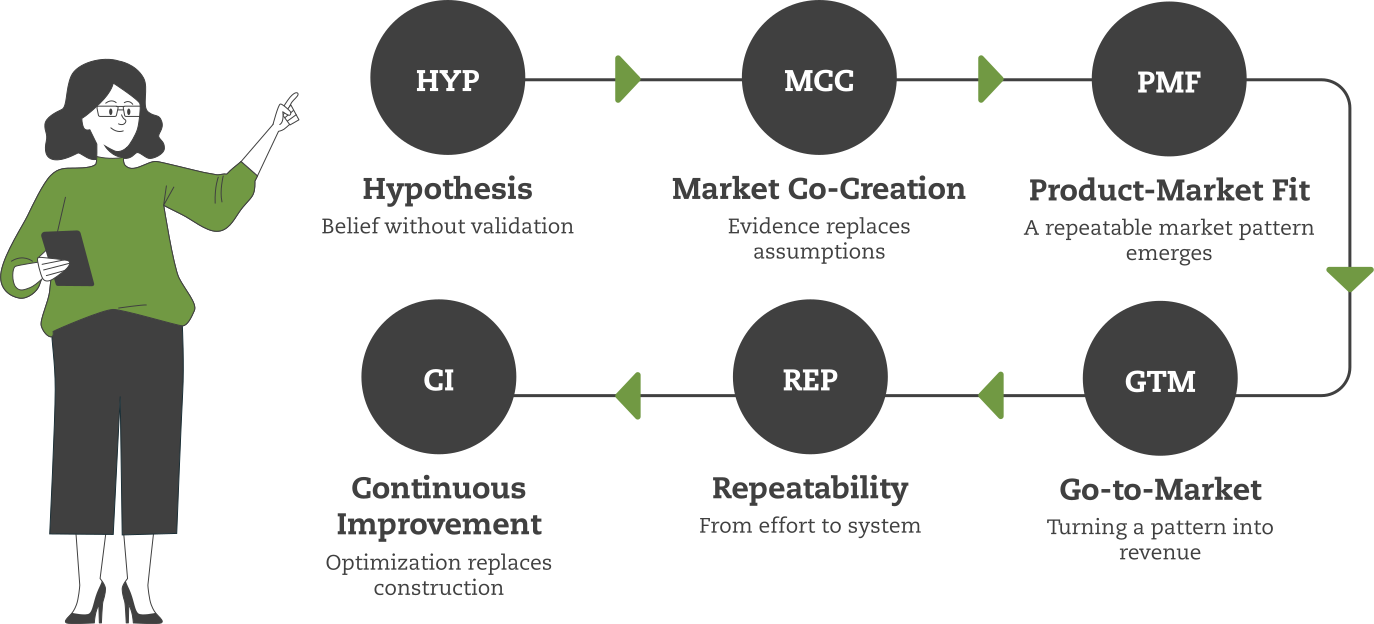
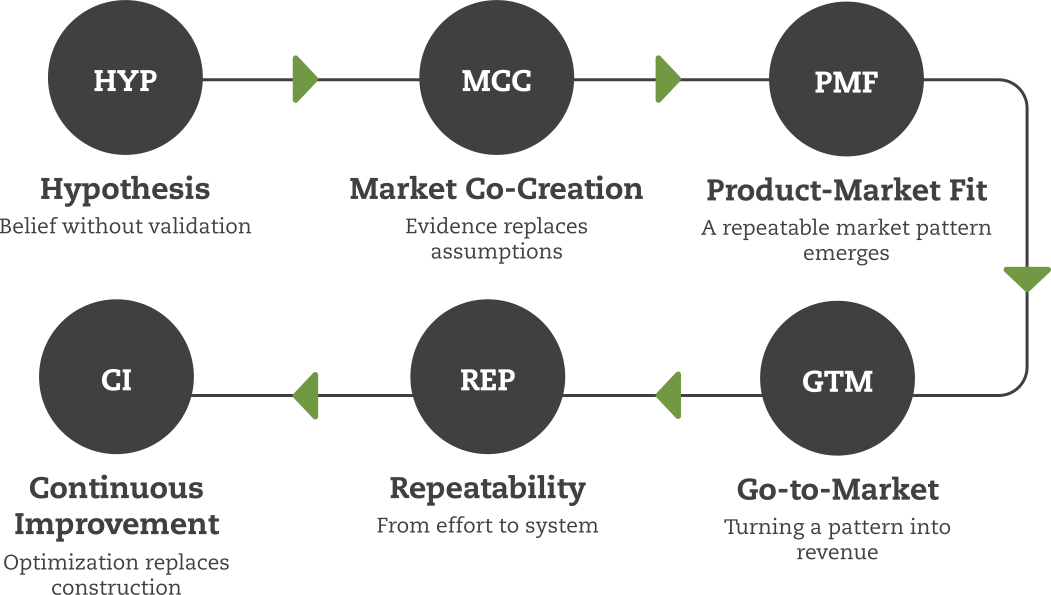
Belief without validation
At this stage, the founder believes a real problem exists, who experiences it, and why it matters. That belief may come from domain expertise, firsthand exposure, or new technology, but it has not yet been tested in a real customer environment.
Nothing is validated yet.
Exit gate
A real company agrees to act as a committed beta customer willing to co-create and deploy the solution.
Evidence replaces assumptions
Market Co-Creation is where the solution is deployed inside a real customer workflow. This is not research, discovery, or a pilot disconnected from operations. It is real use, real stakeholders, and real consequences.
MCC produces the inputs that make Product-Market Fit possible: buyer language, workflow constraints, stakeholder dynamics, and proof of value.
Exit gate
At least one customer is using the solution in production, endorses its value, is willing to serve as a reference, and confirms it would still be worth adopting at a market-realistic price.
A repeatable market pattern emerges
PMF is not enthusiasm or anecdotes. It is a measurable signal that a specific segment consistently recognizes the problem and the value.
PMF is defined empirically: Five partial BANT (Budget, Authority, Need) leads from the same Ideal Customer Profile (ICP), persona, and message.
Exit gate
Five independent partial-BANT leads from one defined segment and message.
Turning a pattern into revenue
With PMF established, GTM focuses on execution. The goal is not scale, but consistency. The company builds its first structured sales and marketing motion that reliably creates pipeline and converts opportunities.
Exit gate
A functioning GTM motion that produces consistent pipeline and revenue, plus sufficient revenue or capital to fund revenue system build-out.
From effort to system
Repeatability transforms early traction into a predictable revenue engine. Processes are documented. Conversion rates stabilize. Teams can execute without relying on any one individual.
Exit gate
Documented processes, consistent conversion rates, reliable pipeline creation, and leadership capable of running the system independently.
Optimization replaces construction
Once the revenue system is stable and owned by leadership, the work shifts to refinement. The system evolves as the market, product, and organization change.
This stage never ends, but it only works if the foundation is solid.
Entry condition
A stable, documented revenue system operated by accountable leadership.
Learn More About the Startup Lifecycle
Startup Lifecycle Whitepaper
Get in Touch
If what you’ve read here resonates, begin with a quick check on fit.
No pitch. No pressure. Just context.